
Operating Guide · Guide 04 · 10 min read
LOS Sync Readiness
A pre-flight checklist for connecting Encompass, Calyx Point, LendingPad, Arive, or a CSV fallback without creating status conflicts.
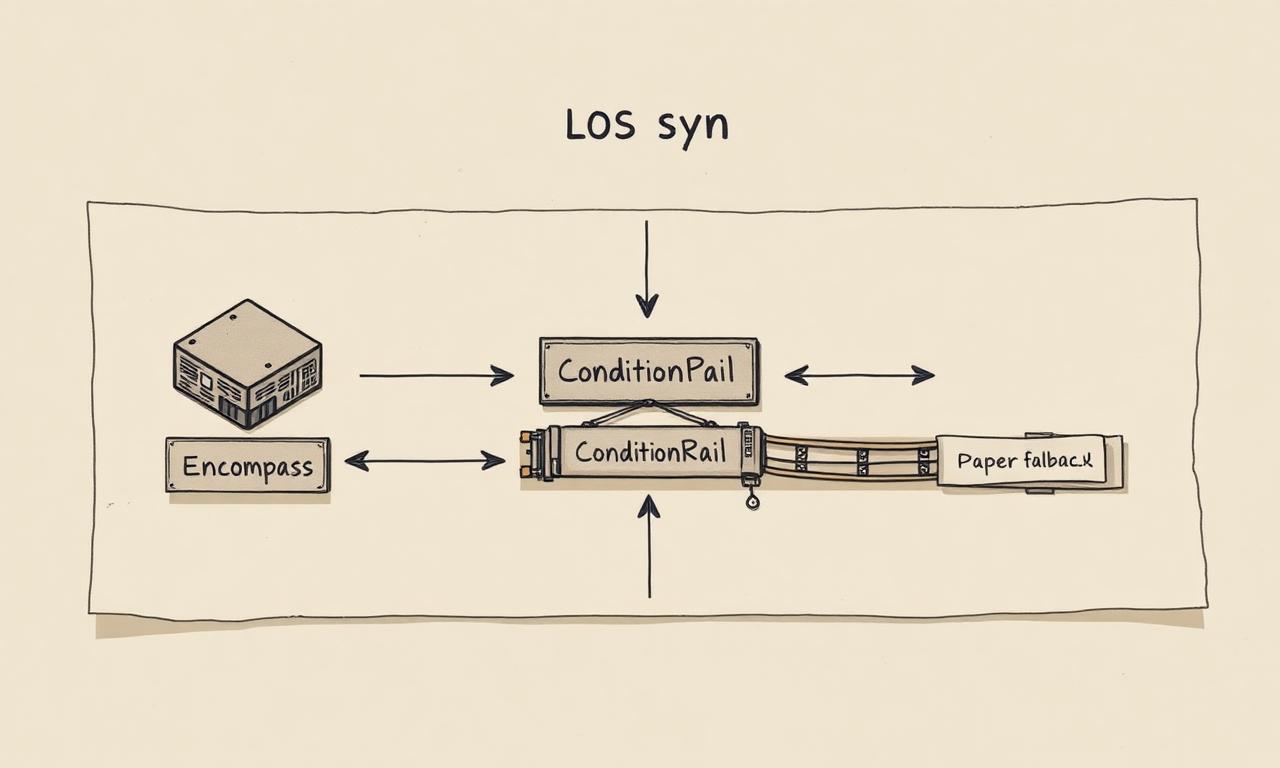
Who this is for
- Operations managers planning a first LOS connection.
- Admins deciding what may be written back automatically.
- Processors who work in both the LOS and the condition rail.
- Teams running a CSV fallback while an API is unavailable.
Step 01
Choose the source of truth
Decide which system owns borrower identity, condition status, document storage, and final review state before enabling write-back.
| Domain | Decide before write-back |
|---|---|
| Borrower identity | Which system holds the authoritative record |
| Condition status | Which side wins on conflict |
| Document storage | Where the original file lives |
| Final review state | Who marks the file review-complete |
Step 02
Map statuses carefully
ConditionRail states should map to LOS statuses without collapsing exception review into clearance.
Step 03
Set write-back boundaries
Write routine status and packet metadata only. Do not write approval, denial, waiver, adverse-action, or final underwriting outcomes.
Step 04
Keep CSV fallback ready
If an API is unavailable, scheduled CSV import/export keeps the rail moving without pretending the connector is live.
What ConditionRail can prepare
- Field mapping between the rail and your LOS statuses.
- Routine status and document-receipt write-back.
- Retryable exceptions when a sync attempt fails.
- A CSV import/export path when a connector is unavailable.
- An audit row for every sync attempt, with before and after values.
What stays with your team
- Choosing the system of record for each data domain.
- Approving which fields may be written back.
- Resolving status conflicts flagged by a sync.
- All approval, denial, waiver, and adverse-action entries.
ConditionRail does not approve, deny, underwrite, waive conditions, issue adverse action, or replace lending staff.